
Vamos estudar nesse post o Simple Present. Daremos atenção na sua formação e uso. Teremos também em destaque as sentenças e o áudio.
> SIMPLE PRESENT = (he, she, it) + s
I/you/we/they work like drink live
he/she/it works likes drinks lives
> verbs that end in > ss/sh/ch/x/z/o + es
he/she/it = kisses watches washes fixes goes buzzes finishes
> verbs that end in > y (preceded by a consonant) y changes to i and es is added.
study try fly cry
he/she/it = studies tries flies cries
No change when a y is preceded by a vowel.
he/she/it = plays enjoys
> verb have > he/she/it = has
> Simple Present Usage:
- for things that are true in general.
- for things that happen sometimes or all the time.
- to talk about habits, to talk about fixed times.
- with verbs that express opinion, agreement/disagreement. (believe, think, mean, agree, desagree).
> when talking about habits, frequency adverbs are often used.
always/never/often/sometimes/usually/rarely/seldom
> talking about habits with other expressions of time:
every day / every night / every week / on Mondays…/ once a week / twice a day / three times a month/year.
Examples sentences:

- I work in an office and my father works in a bank.
- Jim studies in the afternoon.
- Robbie plays football on Sundays afternoons.
- She lives in Canada.
- It rains a lot in the winter.
- We often sleep late on weekends.
- Banks usually open at 9:00 in the morning.
- The baby cries all night.
- My son watches TV after lunch.
- I always listen to the radio.
- The sun rises in the east.
- He always arrives late for class.
- They work hard during the week.
- Brazilians speak Portuguese.
> Simple Present Negative:
| Negative and Short form |
| I do not work. (I don’t work) |
| you do not work. (you don’t work) |
| he does not work. (he doesn’t work) |
| she does not work. (she doesn’t work) |
| it does not work. (it doesn’t work) |
| we do not work. (we don’t work) |
| you do not work. (you don’t work) |
| they do not work. (they don’t work) |
Examples sentences:

- He doesn’t play tennis.
- I don’t eat fish very often.
- she doesn’t drink coffee.
- We don’t watch television very often.
- They don’t know my phone number.
- My brother doesn’t like soup.
- I don’t know him.
- You don’t need a new car.
- My parents don’t like the food.
- The restaurant doesn’t open on Sundays.
| Interrogative | Negative questions |
| Do I…? | Don’t I…? |
| Do you…? | Don’t you…? |
| Does he…? | Doesn’t he…? |
| Does she…? | Doesn’t she…? |
| Does it…? | Doesn’t it…? |
| Do we…? | Don’t we…? |
| Do you…? | Don’t you…? |
| Do they…? | Don’t they…? |
> Wh- questions and word order: Question word + do/does + subject + verb.
Where +do +you+ live?
Examples sentences:
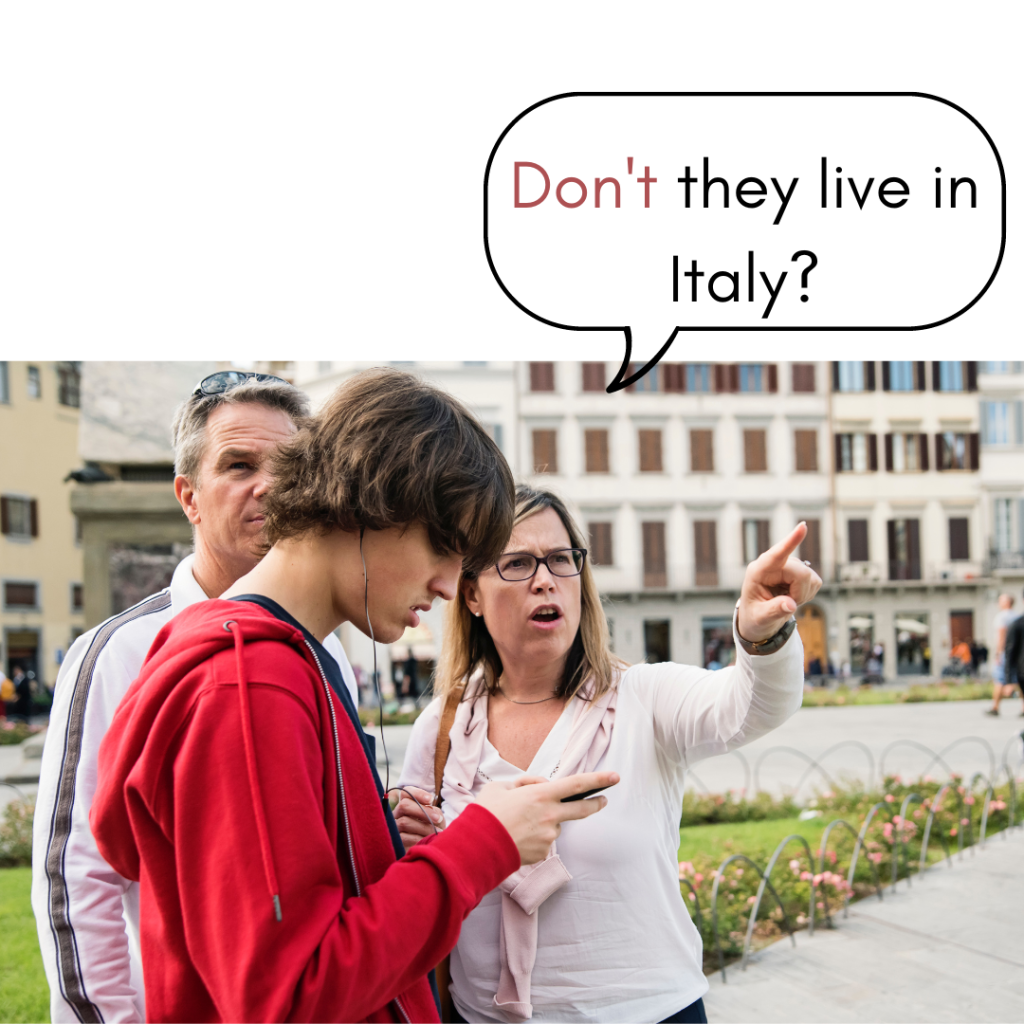
- Don’t they live in Italy?
- Do the children study every day?
- Doesn’t she know about that?
- Do your friends play soccer at the weekend?
- Does he live in a big city?
- Does it rain a lot where you live?
- Do you play the piano?
- Doesn’t Angela look tired today?
- Where does Ashley live?
- How much does it cost?
- What does this word mean?
- How often do you wash your hair?
- Why does he get up early on Sunday?
| Short answers | |
| Yes, I/we/you/they do. he/she/it does. | No, I/we/you/they don’t. he/she/it doesn’t. |
Examples sentences:

- Do you play chess? No, I don’t.
- Do your parents speak English? Yes, they do.
- Does he work hard? Yes, he does.
- Do they live in Brazil? Yes, they do.
- Doesn’t he like chocolate? No, he doesn’t.
Exercises:
Crosswords – Simple Present + Vocabulary
Combinação – Simple Present + Vocabulary
Trem e Balão – Vocabulário
 Way to go!