
Aprenda mais com os textos e o áudio. Amplie seu vocabulário.
1– Plans for 2025.

As the New Year begins, I am excited to think about my plans for 2025. This holiday is not just about fireworks (fogos de artifício) and parties; it’s also a time to reflect and set (estabelecer/ definir) new goals. I want to focus on personal growth (crescimento pessoal), like reading more books and improving my skills at work.
I also plan to travel more this year. Exploring new places and meeting different people always brings joy and learning (aprendizado) to my life. Another important goal is to start exercising regularly. Health is a priority, and I want to take care of my body and mind.
For my family, I hope to spend more time with them and create special memories. We are already planning a trip together during the summer holiday. Additionally, I want to save money to achieve (alcançar/ conquistar) financial stability.
2025 feels like a fresh start (um novo começo), and I am determined to make it a great year. Writing down (anotar/ escrever) my goals helps me stay motivated. Let’s make it the best year yet (até agora)!
2 – Don’t talk to strangers.

It’s important to be careful when talking to people you don’t know. Strangers might seem nice, but you can’t always trust them. Some people have bad intentions, and it’s hard to tell who they are at first. If someone approaches (aproximar) you on the street or online, think carefully before answering.
Parents often tell their children, “Don’t talk to strangers,” to keep them safe. It’s a simple rule that helps avoid (evitar) danger. If a stranger asks for your personal information, like your name, address, or phone number, never give it out (forneça).
Online, this rule is even more important. Many strangers on social media or websites pretend (fingem) to be someone else. If you feel uncomfortable, block them or tell someone you trust.
Stay alert (fique atento) in public places. If a stranger makes you feel unsafe (inseguro), walk away (afaste-se) or call for help. It’s not rude (não é falta de educação) to protect yourself. Safety always comes first!
3 – Hospital Services.

Hospitals are busy (movimentados) places where doctors and nurses work hard to take care of (cuidar) patients. You can see many things in a hospital, like beds, stretchers (macas), and wheelchairs (cadeiras de rodas). Patients who need help moving are often taken on a stretcher or a wheelchair.
Ambulances bring people to the hospital quickly during emergencies. Inside the ambulance, there is medical equipment to help patients on the way. When they arrive, doctors and nurses are ready to help.
Hospitals also have machines like X-ray (raio-X) and ultrasound (ultrassom) to check inside the body. There are special rooms for surgeries and a pharmacy to provide medicine (fornecer remédios). The waiting room (sala de espera) is where families stay while doctors work.
Cleanliness (limpeza) is very important in hospitals. Workers clean the rooms, and everyone wears masks and gloves (luvas) to keep things safe. Hospitals are places of hope, where people come to get better (melhorar) and heal (curar).
4 – Christ the Redeemer.
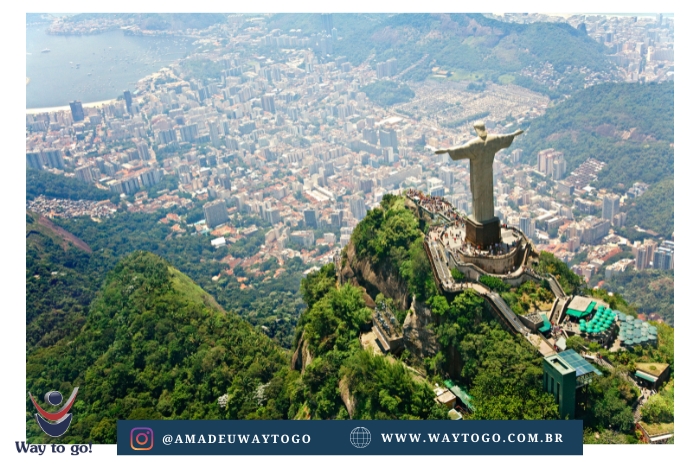
Christ the Redeemer (Redentor) is one of the most famous landmarks (pontos turísticos/ monumentos) in Brazil. It stands tall (fica/ se destaca) in Rio de Janeiro, on top of Corcovado Mountain. The statue is 38 meters high (de altura), including its base, and it can be seen from many parts of the city.
The construction of Christ the Redeemer started in 1922 and was completed in 1931. It was built to celebrate Brazil’s 100 years of independence. The statue was designed (foi projetada) by the Brazilian engineer Heitor da Silva Costa and sculpted (esculpida) by French artist Paul Landowski.
Tourists from all over the world visit this incredible monument. To reach (chegar) it, visitors can take a train ride (pegar um trem) through the Tijuca Forest, one of the largest urban forests (florestas urbanas) in the world. Once at the top, the view is breathtaking (de tirar o fôlego). You can see the city, the beaches, and the mountains.
Christ the Redeemer is also a symbol of peace and faith. It has been listed as one of the New Seven Wonders (Sete Maravilhas) of the World since 2007. At night, the statue is illuminated, making it even more beautiful.
A fun fact (curiosidade) is that the statue was struck (atingida) by lightning (raios) several times, but it remains standing strong (firme). Visiting Christ the Redeemer is a must (obrigatório) for anyone traveling to Rio!
Exercises:
Combinação- Lesson 49 (breve)
Definitions: (Waytogo and Dictionary Cambridge/Collins/Longman/Macmillan/Oxford/Lexico)
Aprenda Inglês com texto e áudio. Texto de nativos para ampliar seu vocabulário de forma divertida e dinâmica. English audio and text.
 Way to go!